go up a level
Evolution of things
For a thing to sell better than other things of similar purpose,
it must be better than others in some way.
One way to improve a thing is
to add additional "useful" functions to it. The "usefulness" of
these functions is that they are either useless or even harmful
because they interfere with the use of the thing.
It takes a good intellect to understand this.
Most people do not have a good enough intellect,
so they are more likely to buy an "improved" thing,
rather than just a good one. As a result,
almost all mass-market things are crippled by "improvements".
* * *
The more complex the thing, the more opportunities for "improvement".
A nail is a very simple thing, so it cannot be "improved".
A ruler is more complex and so it can be "improved":
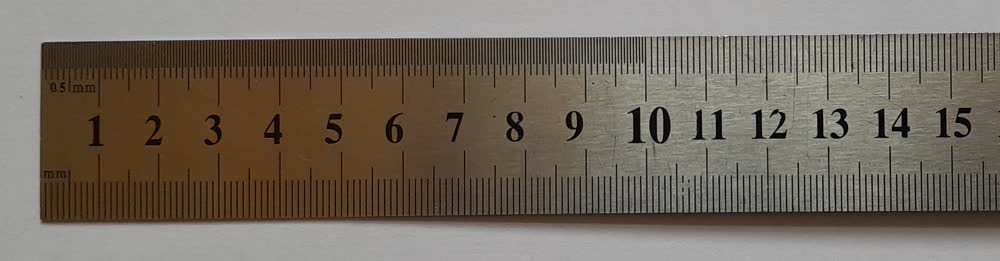
On the first 10 centimeters the marks are made with a
step of 0.5 mm - because of this it is difficult to see
what a specific mark means and the first 10 cm of
the ruler become useless.
Computers, programs for them and the Internet - these are very
complex things and they can be "improved" endlessly.
* * *
Everything in this world is born sometime,
reaches its peak sometime and dies sometime.
Things are also subject to this universal law.
Let's consider the evolution of things using the example of
computer technologies (computers, computer programs, the Internet).
The first generations of computers were weak and expensive.
They were not suitable for mass consumption.
They did not have to compete with each other for the attention
of buyers, so they did not have any "improvements".
The next generations of computers become more powerful and cheaper.
The Internet appears.
Many people become interested in computer technologies.
Computers, programs and Internet sites begin to compete
with each other for their attention and begin to "improve".
Up to a certain point in time, there aren't too many "improvements"
and they don't really interfere. Up to that point, computers,
programs, and the Internet actually get better, even despite the
"improvements."
This is the heyday of computer technology (around 2010-2013).
Afterwards, degradation begins.
A paradoxical situation arises: computer technologies
are becoming more powerful and cheaper, but at the same time,
more and more useless.