go up a level
On the poverty of digital sound synthesis
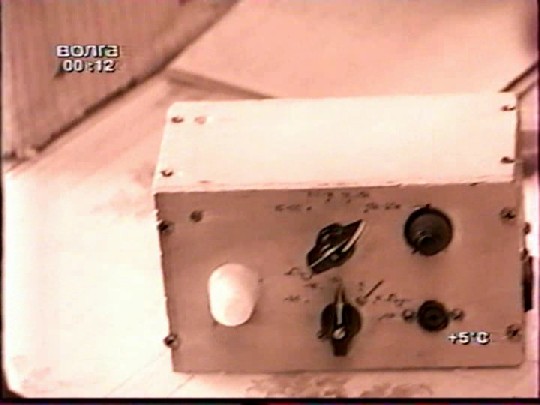
This is an electric generator that I assembled when I was a child. It
can generate a sinusoidal and a rectangular signal. I used it to
debug radio equipment. But I also just played on it, because
it is essentially the simplest synthesizer, and an analog synthesizer
at that.
There is only one way to play it, namely by turning the frequency
control knob.
Then I moved from amateur radio to programming and made a digital
analogue of the same generator, i.e. the simplest digital synthesizer.
Comparing both generators, analog and digital, I found that if the
generators are not touched, they sound the same. But if the
frequency of the generator is changed, a difference in sound
occurs: the digital generator, compared to the analog one, sounds
uninteresting.
Therefore - the difference appears with external influence.
(I did a similar experiment with 2nd order analog and digital filters.
The result is the same as with generators: while
the filter cutoff frequency does not change, there is no difference
in the sound, when the frequency changes, the difference is
noticeable and it is not in favor of the digital filter.)
Without external influence, the generator is in a certain state of
equilibrium. External influence takes the generator out of the
equilibrium and starts transient processes.
After the completion of the transient processes, the generator comes
to a new state of equilibrium.
Therefore, the difference in sound is due to
transient processes.
Transient processes of the analog generator can be not only heard,
but also seen - on the oscilloscope screen.
When the "frequency" knob is rotated, not only does the signal
frequency change, but its amplitude also fluctuates.
But the transient processes of a digital generator cannot be heard
or seen -
when the "frequency" knob is rotated, the signal simply
changes frequency instantly, without fluctuating amplitude.
Then we can say that a digital generator DG is an
analog generator AG, but without
transient processes TP:
DG = AG - TP
or
AG = DG + TP
Therefore, in order to enrich the sound of a digital generator,
it is necessary to add transient processes to it.
Judging by the sound of music made on
digital synthesizers, this turns out badly. I believe that the
reason is the lack of a good mathematical model of transient processes.
Why do most people not notice the poverty sound of digital
synthesizers?
Based on the above, we can write:
analog_synthesizer  = AG = DG + TP
digital_synthesizer      = DG + imitation_of_TP
Therefore, the poverty of digital sound can only be felt by
those who can perceive the difference between transient processes
and their imitation.
Using the terminology and model from the article "Analysis of
information", we can imagine transient processes and their
imitation as information flows. Since transient processes occur
according to the laws of physics, i.e. nature, and the imitation
of transient processes is a creation of man and man cannot act
as subtly as nature, it is quite natural that transient processes
are a more rich information flow than the imitation of transient
processes.
To perceive a more rich information flow, a more developed
nervous system is needed.
Therefore, the aesthetic advantages of analog
synthesis cannot be evaluated by most people.
But they can evaluated the practical advantages of digital synthesis,
which are undeniable:
the cost of equipment, ease
of use, and space savings in the studio. This is why analog
synthesizers have been replaced almost everywhere by digital ones.